Built for the firms that design and engineer construction work, not the crews that build it
Architecture practices, power-line and utility engineering consultancies, and network or telecom infrastructure design firms run project-based, billable-hour work for construction and infrastructure clients. Eos connects the disciplines, deliverables, licensure, and billing that work depends on.
Staff by discipline and license
Assign civil, structural, electrical/power, and network engineers based on who actually holds the required qualification, not who is simply free.
Track deliverables, not tasks in the abstract
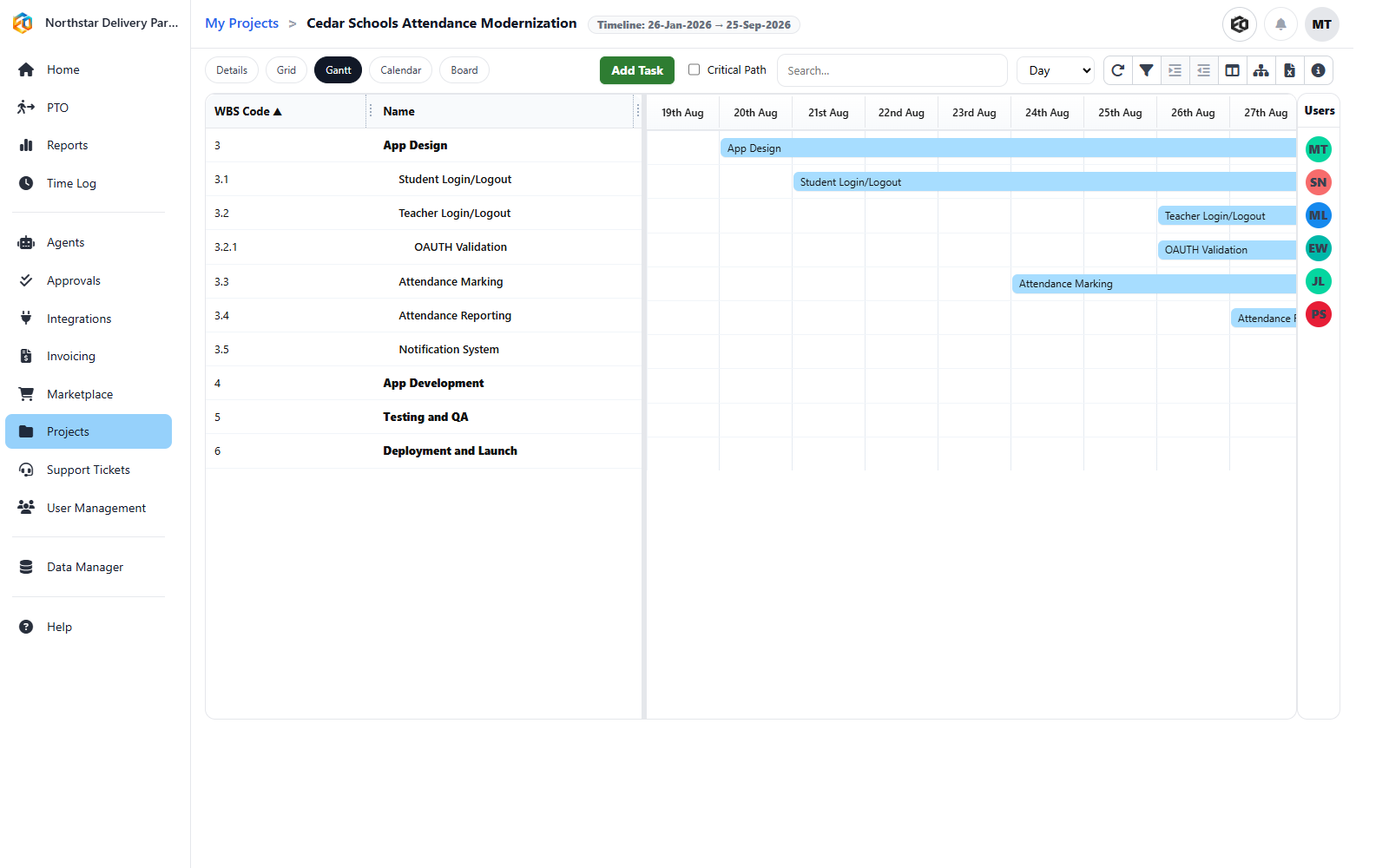
Drawings, specifications, permit packages, and design phases move through the same plan as the milestones and dependencies around them.
Bill against phases, not guesswork
Move approved billable hours and milestone completions into invoice-ready drafts without finance reconstructing the story from email.
Design and engineering consultancies aren't run like a general contractor
The firms Eos fits best here don't manage site crews or materials — they manage billable engineering and design staff delivering phased work for clients who are building something. Eos models that as one connected system: staffing, deliverables, licensure, and commercial terms in the same place.
What's modeled
- Organizational structure: disciplines, teams, roles
- Workforce qualification: skills, licenses, certifications, prerequisites
- Project execution: projects, phases, milestones, tasks, dependencies
- Commercial: rate cards, billing terms, billing runs, invoices, payments
- Governance: risks, compliance items, decisions, client tickets
Business examples
Structure the engagement
A project lead structures a design engagement using phases, milestones, and task dependencies to sequence civil, structural, and electrical deliverables.
Staff by qualification
A resource manager assigns a power-line engineer to a utility relocation task because their certification and license records match the requirement, not because they were simply next in the queue.
Track licensure before it expires
A compliance coordinator checks license and certification expiry before committing an engineer to a regulated deliverable.
Capture billable time against phases
Engineers log time against the specific phase and deliverable it supports, so billing reflects what was actually produced.
Settle the commercial side
A billing administrator moves approved time and completed milestones into billing runs and invoices; finance tracks payments and outstanding balances.
Track delivery risk across disciplines
A project team records risks, captures decisions, and manages client tickets related to design changes within the same dataset.
Agent examples that already know this work
These are installable templates from the Eos Agent Library, adapted to multi-discipline design and engineering delivery for construction and infrastructure clients.
Resource Capacity Agent
Matches design demand with availability, discipline, skills, certifications, and PTO before a staffing gap becomes a missed deliverable.
Project Health Agent
Reviews milestones, dependencies, budget burn, and staffing pressure across active engagements and prepares the update.
Invoice Preparation Agent
Finds approved billable hours and completed milestones and prepares invoice drafts tied to the source records.
Task Assignment Compliance Monitor
Checks license, certification, discipline, and capacity whenever a design assignment changes. Available in the Agent Library.
Training and Certification Backlog
Compares upcoming demand with current licenses, certifications, and expiry dates to flag renewal needs early. Available in the Agent Library.
Contract Document Review and Update
Extracts deliverables, payment terms, and obligations from client contracts and statements of work. Available in the Agent Library.
See this against one active engagement
Bring one project with identifying details removed: its discipline mix, a recent licensing or staffing issue, and how billing currently gets prepared. We will map it to Eos.
Review this workflow